Skip to content
Coffee education

Ugandan coffee, explained

Uganda is one of Africa’s most important coffee origins and one of its most diverse. Here is what makes it special.

A coffee paradise in East Africa

Volcanic soils, equatorial sun and mountain air

Uganda combines rich volcanic soils, an equatorial climate, high mountains and many microclimates. It is Africa’s largest coffee exporter and one of the few countries producing both fine Arabica and world-class Robusta.

Coffee is more than a crop here. It is a way of life for around 1.8 million households. Understanding Ugandan coffee means understanding the land, the people and the care that goes into every bean.

~1.8M
Households growing coffee
~80%
Of output is Robusta
2
Harvest seasons a year in most regions
100+
Years of Arabica cultivation
Types of Ugandan coffee

Arabica and Robusta

Two species with different growing regions, processing traditions and cup profiles.

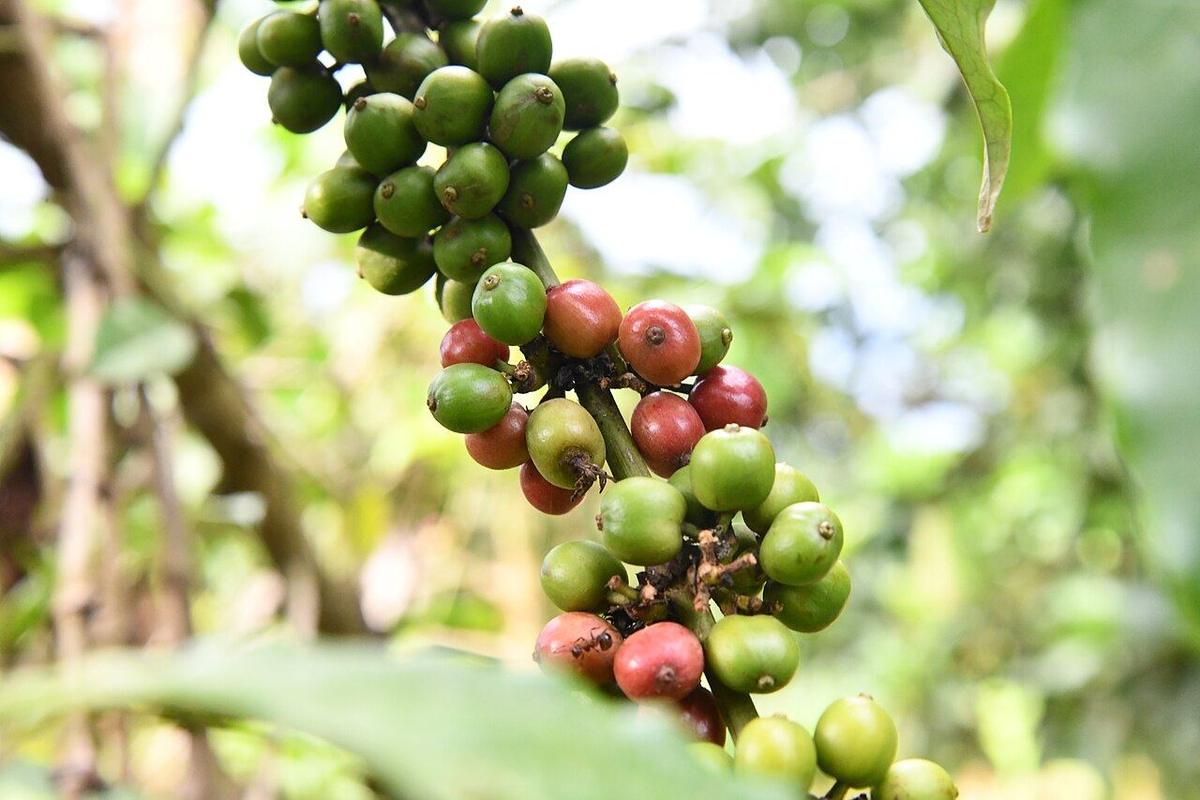
Ripening red and green coffee cherries on a branch in Uganda

Arabica

Highland coffee

Grown on the slopes of Uganda’s mountains, where cool nights slow cherry ripening and build sweetness and complexity.

Growing regions

Mt. Elgon (Bugisu, Sipi, Kapchorwa) in the east, the Rwenzori Mountains in the west, West Nile (Zombo, Nebbi) and the Kigezi highlands near Mt. Muhabura.

Altitude

1,300–2,300 m above sea level. Higher farms produce denser beans with more complex flavour.

Processing

Mostly washed, which gives a clean, bright cup. Bugisu washed Arabica is Uganda’s best-known specialty coffee. Natural Arabica is traded as Drugar.

Flavour profile

Bright acidityFloralCitrusRed fruitCocoa & caramelWine-like
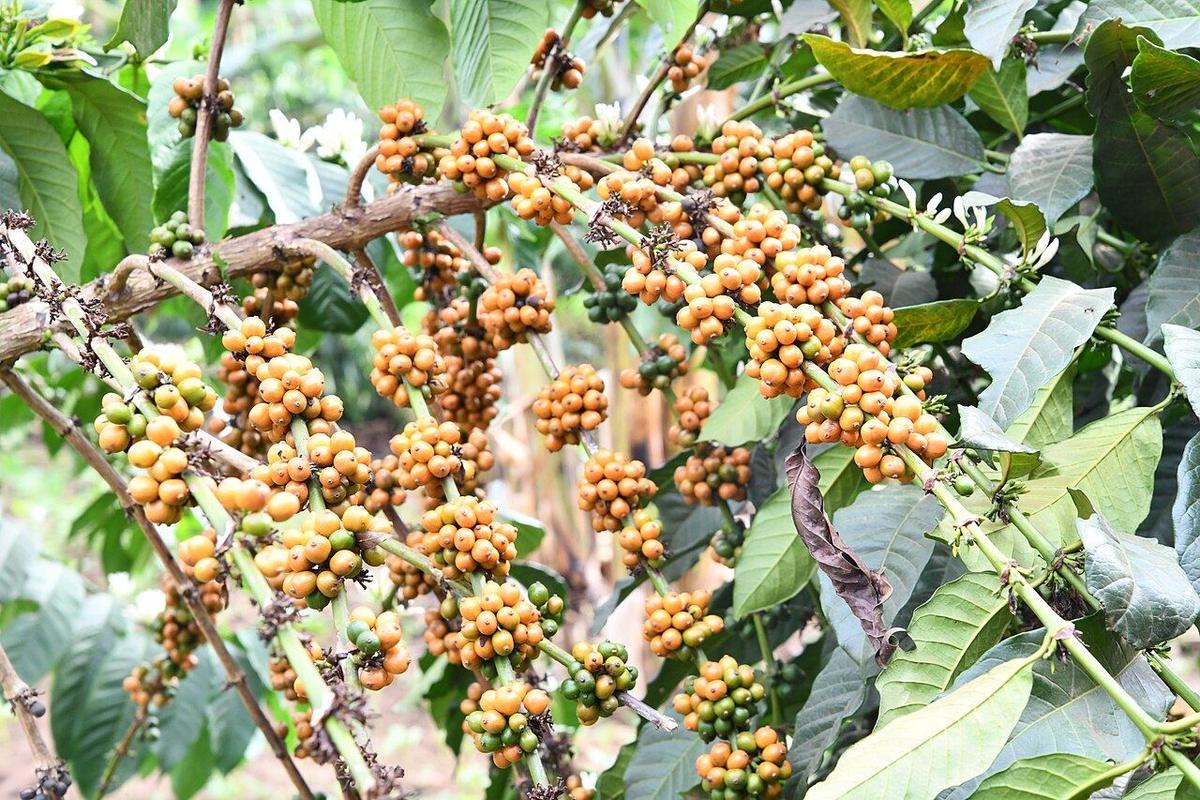
Dense clusters of Robusta coffee cherries ripening along a branch

Robusta

Native to Uganda

Robusta (Coffea canephora) grows wild in Uganda’s forests, so Uganda is one of its true homes. Ugandan Robusta is prized by roasters worldwide.

Growing regions

Central (Masaka, Mukono, Luwero, Mubende, Mityana), South-Western (Bushenyi, Ibanda, Ntungamo) and Mid-Western Uganda (Hoima, Kibaale, Masindi).

Altitude

900–1,500 m above sea level, often higher than Robusta grown elsewhere, which helps give a cleaner, sweeter cup.

Processing

Mostly natural: cherries are dried whole into kiboko, then hulled. Washed and “fine Robusta” lots are a fast-growing specialty niche.

Flavour profile

Full bodyDark chocolateNuttyEarthyLow acidityHigher caffeine
Arabica and Robusta compared
At a glanceArabicaRobusta
Altitude1,300–2,300 m900–1,500 m
Ideal temperature15–24 °C22–30 °C
CaffeineAbout 1.2–1.5%About 2.2–2.7%
Acidity & bodyBright acidity, lighter bodyLow acidity, heavy body
Main processWashedNatural (dry)
Export gradesBugisu AA, A, PB; Wugar (washed); Drugar (natural)Screen 18, 15, 12; washed Robusta
Ideal growing conditions

Why coffee thrives in Uganda

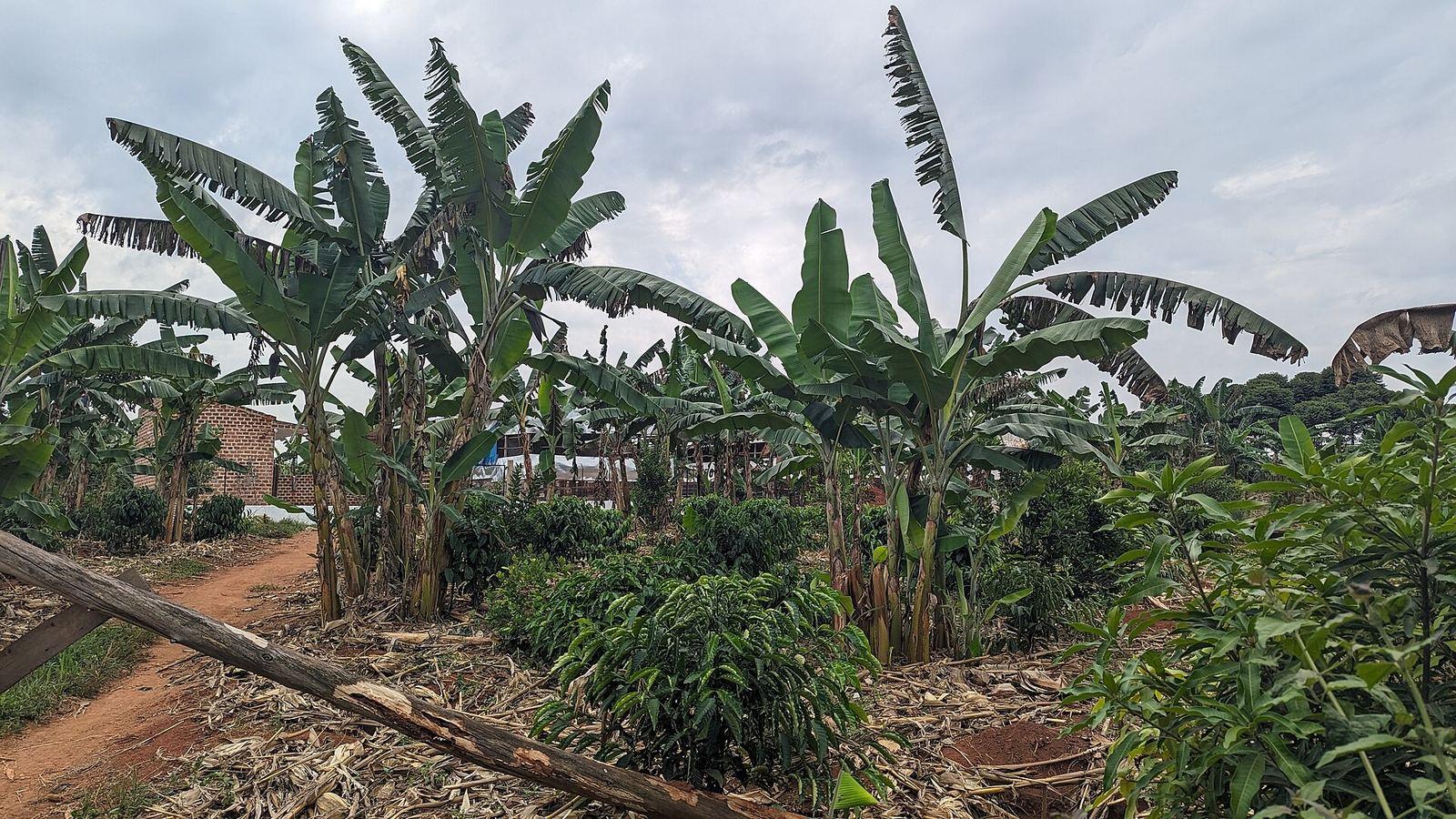
Uganda’s geography and climate create a near-perfect environment for coffee. Most farms are small, family-run plots where coffee grows alongside bananas, beans and shade trees.

Coffee bushes growing under banana plants on a Ugandan farm

Volcanic soils

Deep, mineral-rich soils around Mt. Elgon and the Rwenzori feed the trees and drain well while holding moisture.

Equatorial climate

About 1,200–2,000 mm of rain a year in two rainy seasons, giving two harvests in most regions.

High altitude

Cooler mountain temperatures slow ripening, producing denser beans with more sugar and complexity.

Shade & agroforestry

Bananas and shade trees protect soil, regulate temperature, support biodiversity and add household income.

Harvesting & processing

From cherry to green bean

Up to half of a coffee’s final quality is decided after picking. These are the steps that matter.

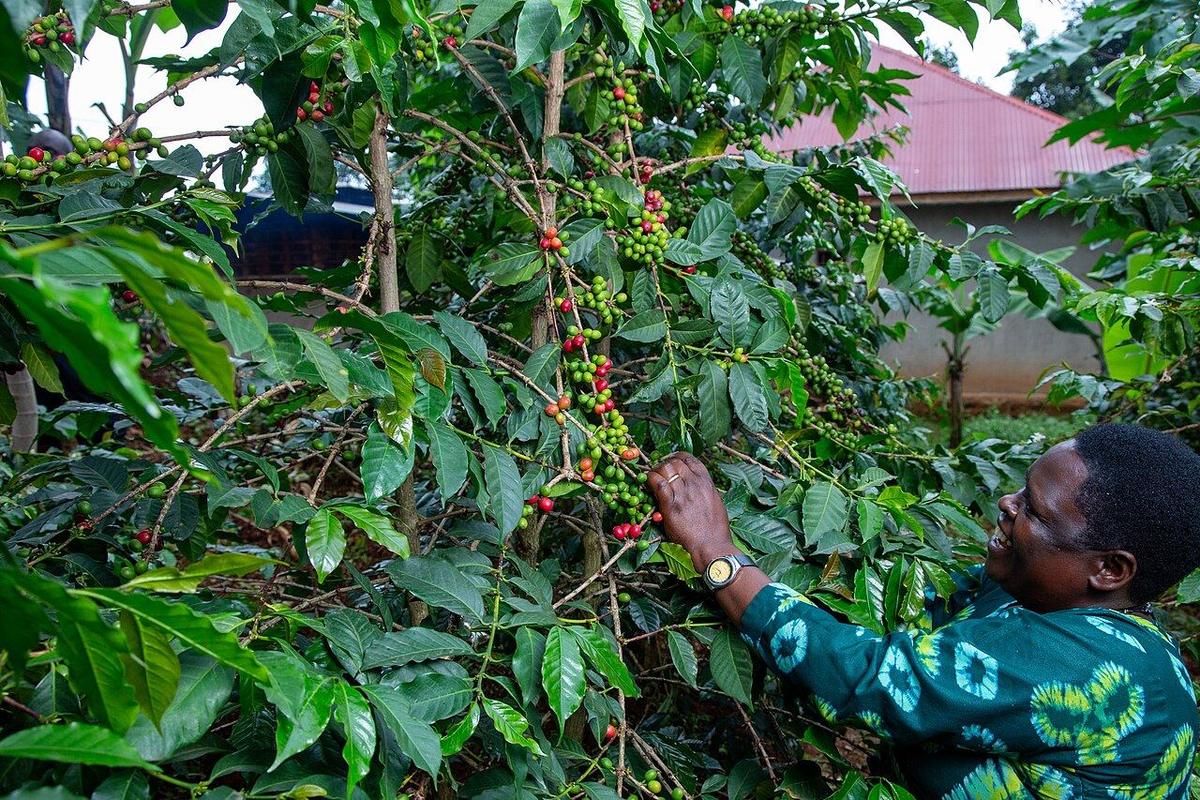
A woman selectively picking ripe coffee cherries from a tree
1 Harvesting

Selective hand-picking

Only fully ripe, red cherries are picked, over several passes through the farm. Mixing in green or over-ripe cherries is the most common cause of poor cup quality.

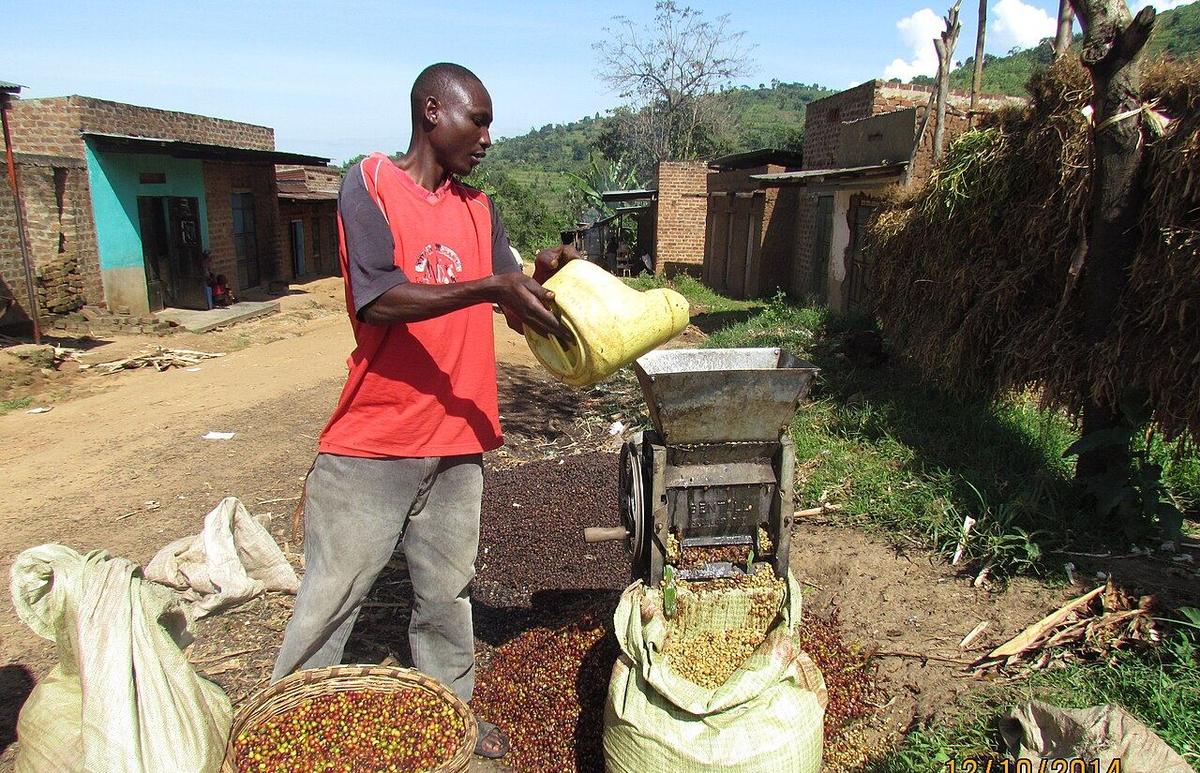
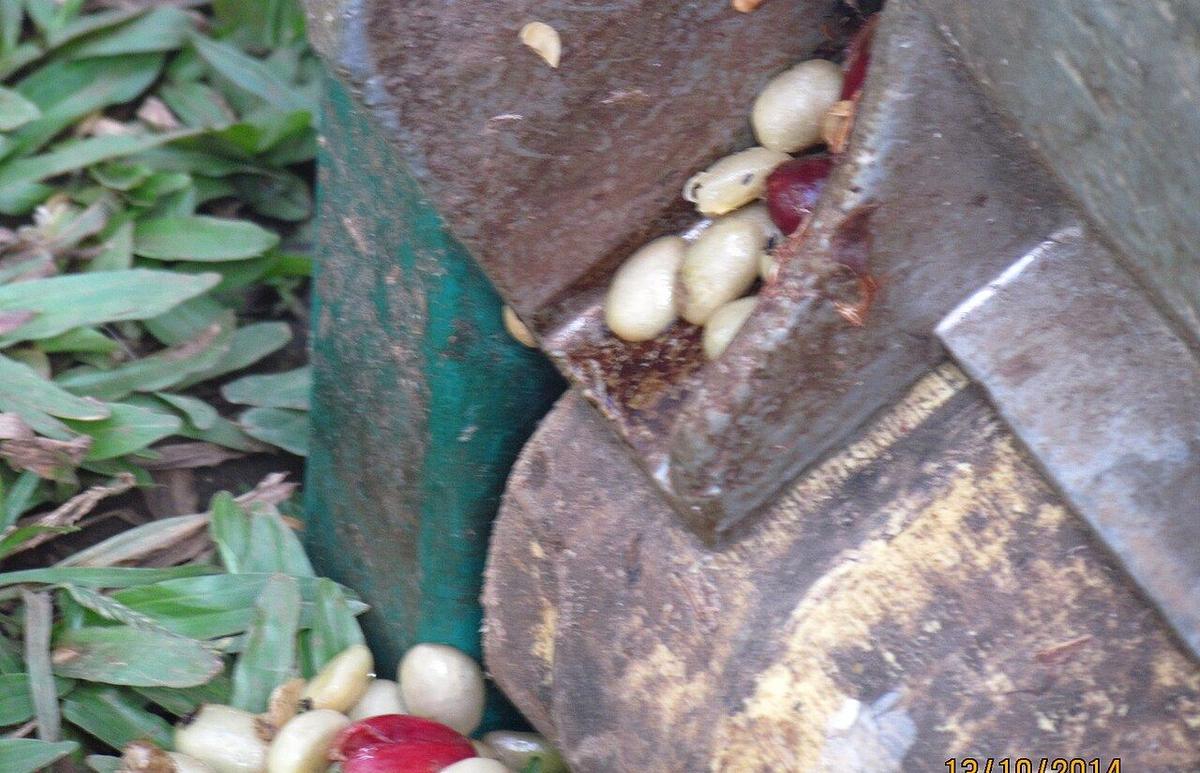
A farmer feeding coffee cherries into a hand pulping machine
2 Washed process

Pulping & fermentation

The skin is removed on the day of picking. Beans then ferment in clean water for about 12–36 hours before washing, which gives clean, bright flavours.

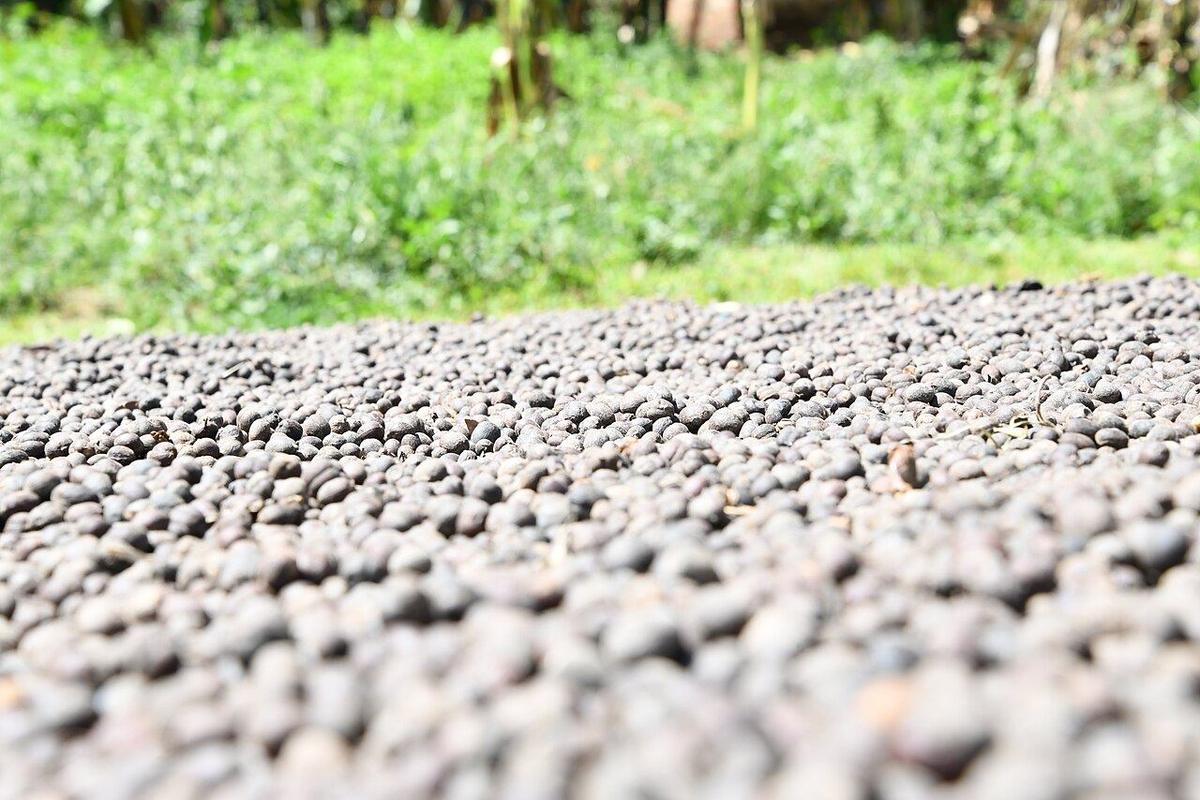
Whole coffee cherries spread out to dry in the sun
3 Natural process

Drying in the cherry

Whole cherries dry in the sun for 2–4 weeks. Done well, on tarpaulins or raised beds and never on bare soil, it gives fuller body and fruity sweetness.

Freshly pulped coffee beans still coated in sticky mucilage
4 Honey process

Semi-washed

Beans are pulped but dried with some sticky mucilage left on. This emerging style in Uganda adds sweetness and bridges washed and natural profiles.

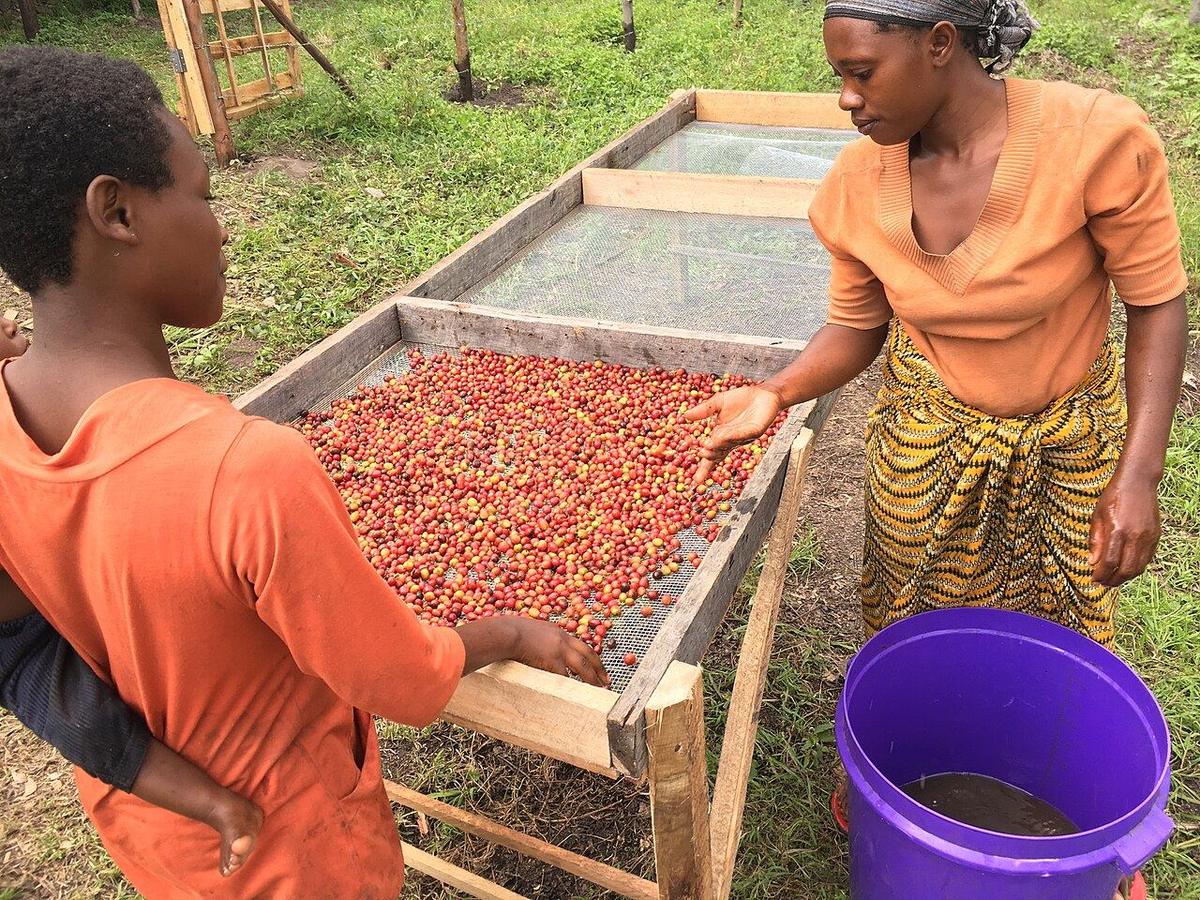
Two women turning coffee on a raised mesh drying bed
5 Drying

Raised-bed drying

Raised beds give airflow on all sides. Coffee is turned often and covered from rain until it reaches about 11–12% moisture, which is safe for storage and export.

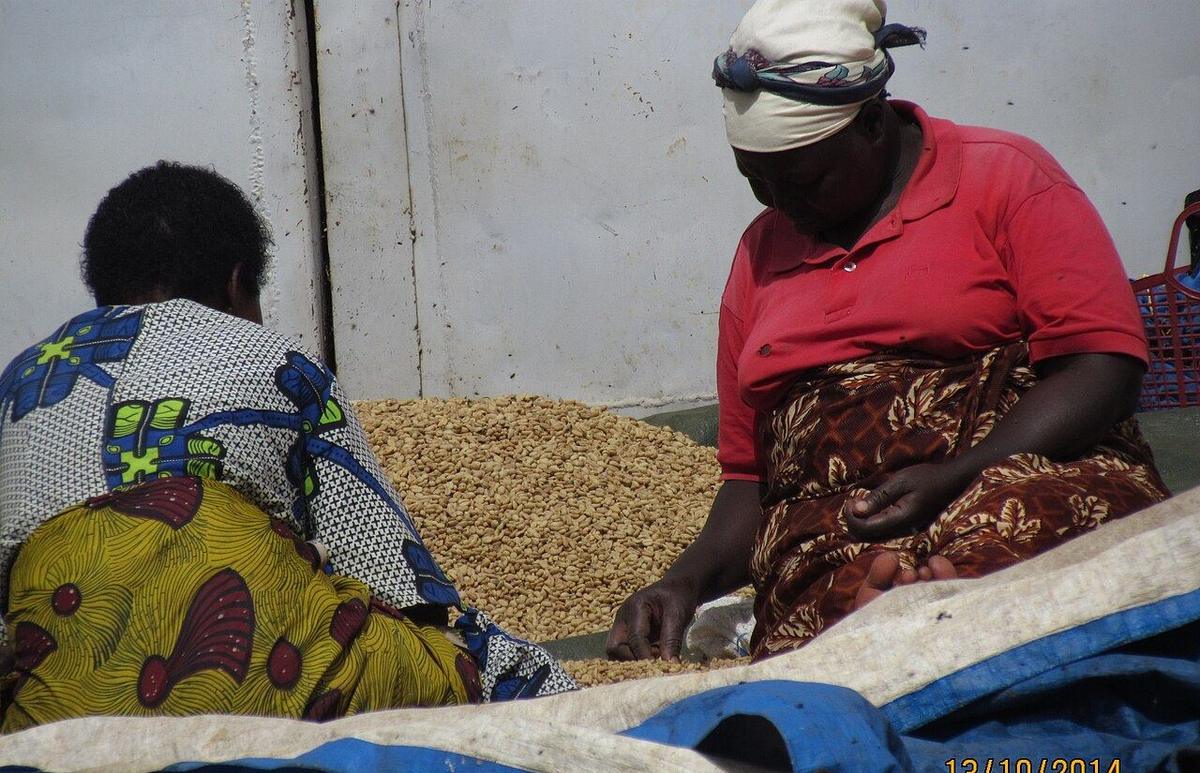
Women hand-sorting dried green coffee beans on a tarpaulin
6 Quality control

Hulling, sorting & grading

Dry parchment or kiboko is hulled, then graded by screen size and density. Defects are removed by machine and by hand before the coffee is bagged.

What sets it apart

What makes Ugandan coffee unique

Dual heritage

One of very few origins producing both exceptional Arabica and world-class Robusta at scale.

Flavour diversity

From bright, floral Arabica to bold, chocolatey Robusta, each region’s microclimate shapes a distinct cup.

Naturally sustainable

Traditional shade-grown, mixed farms protect biodiversity and soil, with low chemical inputs.

Smallholder tradition

Most coffee comes from family farms of about 0.5–2.5 hectares, with deep cultural roots.

Robusta’s homeland

Wild Robusta still grows in Uganda’s forests, giving the country unique genetic diversity.

Traceability & quality

Cooperatives, direct trade and quality programmes make traceable, high-grade lots increasingly available.

Origins

Uganda’s coffee regions

Arabica grows on the high slopes at the country’s edges. Robusta fills the warm, fertile lowlands around Lake Victoria and the west.

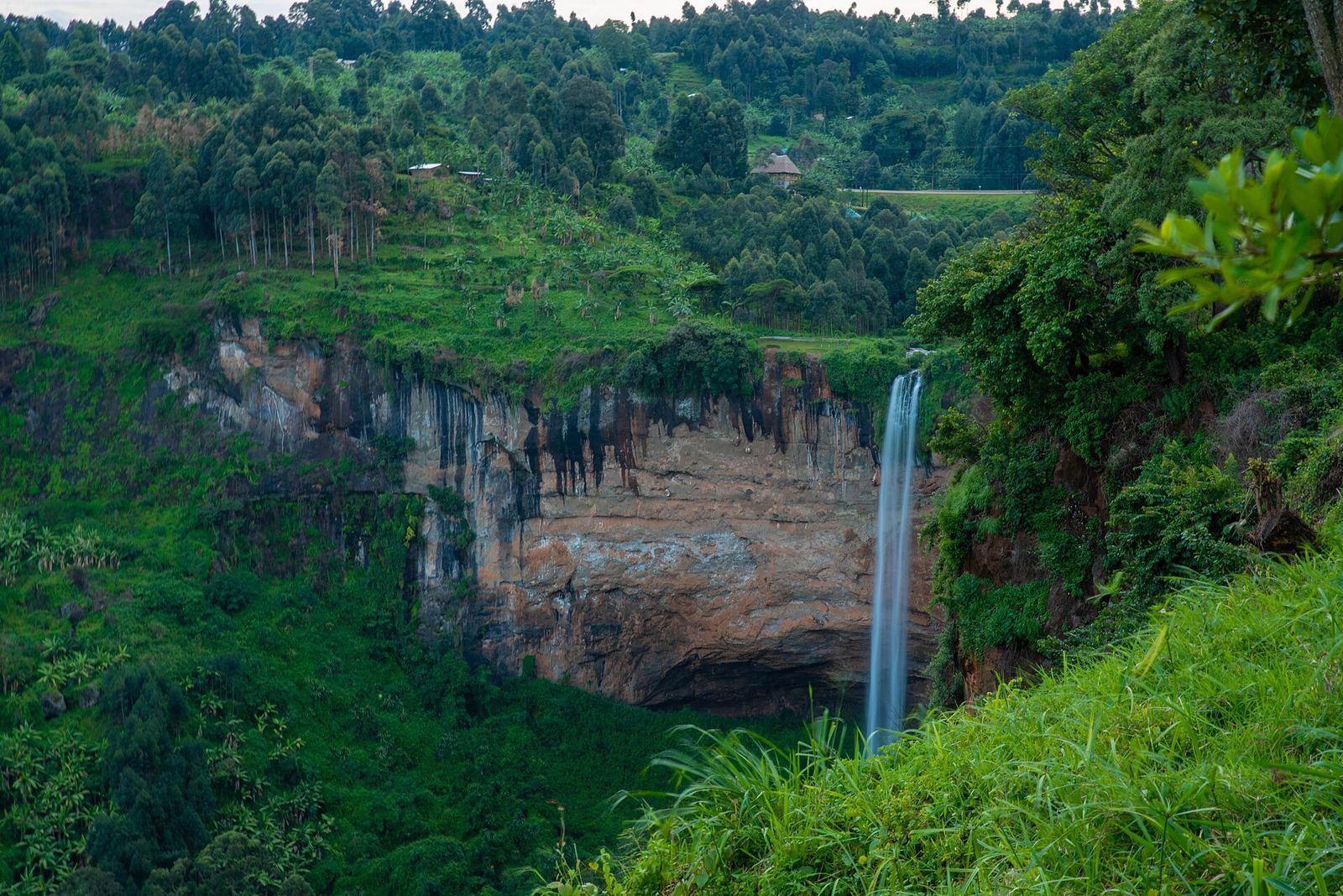
Sipi Falls on the green slopes of Mt. Elgon, eastern Uganda

Sipi Falls, Mt. Elgon: the heart of Bugisu Arabica country.

Mt. Elgon (Eastern)

Arabica

Mbale, Sironko, Bulambuli, Kapchorwa, Bukwo · 1,600–2,300 m

Bright, complex washed Arabica with citrus and wine-like acidity. Home of Bugisu.

Rwenzori Mountains (Western)

Arabica

Kasese, Bundibugyo, Kabarole · 1,300–2,200 m

Smooth, balanced Arabica with chocolate and stone-fruit notes.

West Nile (North-Western)

Arabica

Zombo, Nebbi · 1,400–1,800 m

Sweet, rounded Arabica from the Okoro highlands near the Congo border.

Central & Lake Victoria basin

Robusta

Masaka, Mukono, Luwero, Mubende, Mityana · 1,100–1,400 m

Bold, full-bodied Robusta. The heart of Uganda’s production.

South-Western

Robusta

Bushenyi, Ibanda, Ntungamo · 1,200–1,500 m

Clean, sweet Robusta from the region’s higher, cooler farms.

Mid-Western

Robusta

Hoima, Kibaale, Masindi · 900–1,200 m

Earthy, chocolatey Robusta.

Questions

Coffee FAQ

Can’t find your answer? Ask us.

Not necessarily. Robusta has a different profile: more body, more caffeine and less acidity. Carefully picked and processed Ugandan Robusta can be outstanding, and “fine Robusta” is now cupped and scored much like specialty Arabica. It also gives espresso its rich crema.

They describe how the fruit is removed from the seed. Washed coffee has its fruit removed before drying, which gives a clean, bright cup. Natural coffee is dried whole inside the cherry, which gives more body and fruity sweetness.

Cooler temperatures at altitude slow the ripening of the cherry. The bean has more time to develop sugars and acids, so it is denser and more complex in flavour.

Keep beans in an airtight, opaque container at room temperature, away from heat, light and moisture. Grind just before brewing and enjoy within about 4–6 weeks of the roast date. Avoid the fridge, where beans absorb moisture and odours.

Experience Ugandan coffee

Now that you know the story, taste it for yourself. Every cup supports the farmers who make it possible.